Shaboozey: The Outlaw Cherie Lee & Other Western Tales review – a striking addition to the rich canon of country concept albums
(American Dogwood/Empire) Beneath the Hollywood narrators, Pink Floyd-y interludes and accompanying comic books lies songwriting that proves the Tipsy singer’s breakout success was no fluke It’s fair to say that if…
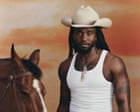
It’s fair to say that if Shaboozey never released another note of music, his place in history would still be assured.
He wasn’t the only Black country-leaning artist brought to a wider audience by a guest appearance on Beyoncé’s 2024 album Cowboy Carter, but no one else capitalised on the exposure quite so remarkably. Released two weeks after his guest appearance on that album’s Spaghettii, his single A Bar Song (Tipsy) unexpectedly eclipsed Beyoncé’s success, becoming the biggest-selling country single of the year – more than 1.75bn streams and counting on Spotify – and for a time, the joint longest-running US No 1 of all time. He’s received three nominations at the Country Music awards, an event traditionally resistant to artists of colour. The accompanying album, Where I’ve Been, Isn’t Where I’m Going, was by far the most successful sustained attempt to fuse hip-hop and country, two genres that have been warily circling each other for some time, spawning the occasional novelty hit such as Nelly and Tim McGraw’s Over and Over Again, the Ludacris-featuring 2010 remix of Jason Aldean’s Dirt Road, and Lil Nas X’s Old Town Road; the baleful, rap-influenced spectre of bro country; and the deep underground sub-genre of hick-hop, a hidden world of Maga politics, confederate flags and festivals held at Georgia mud holes. The album is still on the US chart, 112 weeks after its release.
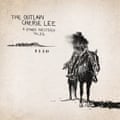
Understandably, its success has led Shaboozey to swing for the fences two years on. The Outlaw Cherie Lee & Other Western Tales is a 20-track concept album, accompanied by a three-issue comic of the same name. It features scene-setting interstitial tracks: cinematic and orchestral, ambient and Pink Floyd-y, with weeping pedal steel subbing for David Gilmour’s trademark mournful string-bends. There’s narration by actors Jamie Foxx, Teyana Taylor and Sam Elliott, the latter going some way to ameliorate the traditional problem with concept albums: that the listener quickly loses the thread of the narrative and spends most of the album listening without a clue what’s supposed to be going on.
Country got to concept albums long before rock did. Marty Robbins’ thematically linked Gunfighter Ballads and Trail Songs were released in 1959, Johnny Cash’s Bitter Tears in 1964 – and they loom large in the genre’s history. Willie Nelson’s Red Headed Stranger, the 1975 saga of a murderer on the run, is regularly voted the greatest country album of all time; many major artists, including Emmylou Harris, Kenny Rogers and Dolly Parton, have at least one in their catalogue. You could thus view The Outlaw Cherie Lee as a concerted effort to pivot away from pop into country’s heartlands, albeit while still featuring a heavily Auto-Tuned guest appearance by rapper Gunna on High Noon (“spent a hundred thou on clothes / I got bad hoes,” he offers, presumably not referencing farming equipment). Cowgirl and Born to Die are two obvious – and, it has to be said, remarkably charming – attempts to replicate the success of Shaboozey’s biggest hit: “Got another bar song for you,” he notes by way of introduction to the former. Bullets and Blades, meanwhile, is a big and strikingly beautiful ballad with Shaboozey duetting with R&B star Kehlani.
Elsewhere, The Outlaw Cherie Lee is more purely country: If I Was an Outlaw has saloon-bar piano, Sweet Revenge goes country rock, while the closing track is a burst of the traditional cowboy ballad Streets of Laredo sung by Orville Peck. The album’s predominant mode is stark and brooding, driven by fingerpicked acoustic guitar and decorated with fiddle. At their best, these tracks are darkly atmospheric and powerful – as on Drunk – although it’s occasionally hard not to feel that part of Shaboozey’s USP has gone with his decision to dial down the rap influence in his vocals. He can certainly croon with a glowering power, but there’s a distinct leap in excitement when he reverts to a hip-hop-inspired delivery, the better to inhabit the character of a swaggering outlaw on Til Sunday.
Still, as a demonstration of his eclecticism – or, if you prefer, a desire to be all things to all people – The Outlaw Cherie Lee works well. The pop-facing tracks hit, the strike rate when he diversifies is higher than his naysayers would suggest, and there’s an impressive boldness about his evident desire to draw R&B, soul and hip-hop artists into his world – aside from Gunna and Kehlani, there’s an impressive turn from Leon Bridges on Burn It Down. The overarching storyline is tight and well handled. Perhaps most importantly, the album never feels like the work of an artist whose career has been destabilised by a huge, unexpected and unrepeatable hit, but rather the work of an artist digging in for the long haul.
What Alexis listened to this week
Mr Wa7t – Secrets (Richard Norris Fitness Mix)
The original is great soulful, deep pop, but Richard Norris’s remix turns it into delightfully smooth, hot-afternoon Balearic: very much what is needed at the moment.
Originally published by
The Guardian
Aggregated from a public feed. Read the original at the source for the publisher's full presentation.
View original on theguardian.comContinue reading